Held under the auspices of
Endorsers

October 13-15, 2026 | Event Center Lake Charles, Lake Charles, USA

Awards Banner

AMERICAS LNG AWARDS - CONFIRMED SHORTLISTS

Learn more about our nominees and discover how they went above and beyond.

Americas LNG Award: Project of the Year 2026

Cheniere's Corpus Christi Liquefaction (CCL) Stage 3 project has been shortlisted for its successful delivery of significant new LNG export capacity in the United States.

Located in Gregory, Texas, the development comprises seven midscale liquefaction trains, adding more than 10 million tonnes per annum (Mtpa) of LNG production capacity. The project achieved substantial completion in August 2026, marking the transfer of the seventh and final train to Cheniere.

Following full notice to proceed in 2022, first LNG production was achieved in December 2024, with the remaining trains brought online in phases. The project was delivered safely, on budget, and ahead of schedule through a phased execution approach that enabled new capacity to enter operation while construction continued across the site.

The completion of Stage 3 increased Cheniere's combined LNG production capacity across its US Gulf Coast facilities by more than 20%, reaching approximately 56 Mtpa. The development brings the Corpus Christi facility to ten operational liquefaction trains, with an aggregate nominal production capacity of approximately 25 Mtpa.

The project has been recognised for its execution excellence, operational impact, and contribution to expanding LNG export capacity, making it a strong contender for the 2026 Project of the Year Award.

Commonwealth LNG has been shortlisted for its successful progression from project planning to execution, marking a significant milestone for US LNG export development.

In May 2026, project developer Caturus reached a positive Final Investment Decision (FID) for the 9.5 million tonnes per annum (Mtpa) facility in Cameron Parish, Louisiana. The decision included the closing of $9.75 billion in project financing, supported by total commitments of $21.25 billion. Long-term agreements have also been secured with a diversified customer base, including EQT, Glencore, Mercuria, PETRONAS, and Aramco Trading.

The project's fully modular construction strategy is designed to enhance delivery certainty and reduce execution risk. Early procurement of critical equipment, including compressors, gas turbines, and cryogenic heat exchangers, supported project readiness and helped maintain schedule and cost certainty. Pre-construction activities began in December 2025, followed by EPC contractor mobilisation in March 2026.

As part of Caturus' integrated "wellhead-to-water" strategy, the project is intended to connect US natural gas production with international LNG markets. The facility design incorporates emissions-reduction technologies and provides the potential for future integration of carbon capture and sequestration (CCS) solutions.

The development is also expected to deliver substantial economic benefits, supporting more than 2,000 jobs during peak construction, approximately 300 permanent positions, and generating more than $3 billion in annual export revenue once operational.

The project has been recognised for its investment strength, commercial progress, innovative design, and contribution to advancing US LNG export capacity, making it a strong contender for the 2026 Project of the Year Award.

LNG Canada has been shortlisted for the successful delivery and start-up of Canada's first large-scale LNG export facility, establishing a new route for Canadian natural gas to reach global markets.

Located in Kitimat, British Columbia, on the traditional territory of the Haisla Nation, the project loaded its first export cargo in June 2025. The first processing train entered operation shortly thereafter, followed by Train 2 in November 2025, bringing total production capacity to 14 million tonnes per annum (Mtpa).

The project demonstrated a successful operational ramp-up, safely shipping more than 100 LNG cargoes during its first year of operation. Its Pacific Coast location provides Canada with direct access to international LNG markets and represents a significant expansion and diversification of the country's energy export capabilities.

LNG Canada has also established a strong environmental and community legacy. The facility was designed to achieve an emissions intensity 35% lower than comparable leading facilities and 60% below the global weighted average. Marine operations are supported by HaiSea Marine's battery-powered and low-emissions tug fleet, helping to reduce emissions associated with LNG shipping activities.

The development has generated substantial economic benefits. More than 50,000 Canadians contributed to the construction of Phase 1, while the facility has created more than 300 permanent operational roles. Contracts and subcontracts awarded to local, Indigenous, and other British Columbia businesses exceeded CAD$5.8 billion, including CAD$4.9 billion awarded to Indigenous-owned and local businesses.

The project continues to build on this momentum, with the Phase 2 expansion project receiving limited notice to proceed in 2026.

The project has been recognised for its successful operational delivery, lower-emissions design, and commitment to Indigenous and local participation, making it a strong contender for the 2026 Project of the Year Award.

Port Arthur LNG has been shortlisted for its continued progress in advancing major new US LNG export capacity, with significant milestones achieved across both Phase 1 and Phase 2 of the development.

Over the past year, Phase 1 construction progressed beyond the halfway mark, while Phase 2 reached a positive Final Investment Decision (FID), secured long-term sale and purchase agreements with JERA, ConocoPhillips and EQT, and entered construction. Together, the two phases represent approximately 26 million tonnes per annum (Mtpa) of LNG production capacity, supported by Gulf Coast access and integrated gas infrastructure.

Construction activity has continued at pace. Key milestones in Phase 1 included installation of the main cryogenic heat exchangers for Trains 1 and 2, completion of major LNG storage tank works, energisation of critical site infrastructure, and installation of LNG loading arms. The project also completed its heavy-lift programme and achieved further progress across storage and power systems. In Phase 2, construction advanced with the first mass concrete pour for Train 3.

The full development will comprise four liquefaction trains and three LNG storage tanks, creating one of the largest LNG export facilities on the US Gulf Coast. Train 1 is scheduled to enter commercial service in 2027, followed by Train 2 in 2028 and Trains 3 and 4 in 2030 and 2031.

An integrated infrastructure strategy is designed to support long-term operational reliability. The 72-mile Port Arthur Pipeline Louisiana Connector will provide up to 2 billion cubic feet per day of feedgas capacity, while the LA Storage facility in Hackberry, Louisiana, will provide additional gas storage and supply flexibility.

With a combined capital investment of approximately $25 billion, Port Arthur LNG has been recognised for its scale, execution progress, and contribution to expanding US LNG export capacity, making it a strong contender for the 2026 Project of the Year Award.

Regasificadora del Pacífico has been shortlisted for its role in strengthening Colombia's energy security through the development of a new LNG import and regasification corridor on the country's Pacific coast.

The project is designed to address growing natural gas supply challenges by creating an alternative LNG import route capable of delivering gas to key demand centres across Colombia. Its integrated infrastructure includes offshore LNG storage, maritime transfer, port handling, overland transportation, regasification, and connection to the national gas transportation network near Buga in southwestern Colombia.

By establishing a new supply corridor and reducing reliance on existing import routes and transportation bottlenecks, the project enhances the resilience and reliability of Colombia's energy system at a pivotal stage in the country's energy transition.

The development also supports the broader integration of renewable energy by improving access to natural gas, which provides flexibility to balance fluctuations in electricity generation and demand. This enables a more diversified energy mix while maintaining system reliability.

In addition, the project helps reduce vulnerabilities associated with concentrated supply sources and limited transportation alternatives, strengthening the country's long-term energy security and supporting a more resilient pathway toward decarbonisation.

A significant milestone was achieved with financial close in 2026, supported by a consortium of financial institutions, including Financiera de Desarrollo Nacional (FDN).

The project has been recognised for its contribution to energy security, infrastructure innovation, and support for Colombia's evolving energy transition, making it a strong contender for the 2026 Project of the Year Award.

Venture Global's CP2 project has been shortlisted for its significant progress in advancing new US LNG export capacity and its potential to play a major role in the future global LNG market.

Located in Cameron Parish, Louisiana, CP2 is one of the largest LNG export projects under development in North America. During the awards eligibility period, the project achieved key commercial, financial, regulatory, and construction milestones, moving from development towards execution and demonstrating momentum across multiple areas of project delivery.

The project's modular design builds upon Venture Global's established development model, supporting the phased construction and commissioning of liquefaction capacity. This approach is intended to enhance schedule efficiency, reduce execution risk, and enable LNG production to commence as individual units are completed.

CP2 also represents a substantial long-term investment in Louisiana and the wider US Gulf Coast region. Its development is expected to support construction activity, employment, local procurement opportunities, and tax revenues, while reinforcing the region's position as a leading centre for LNG production and export.

Strategically, the project is expected to strengthen the United States' ability to supply secure and flexible LNG to international markets, helping customers diversify energy supply sources and respond to evolving demand and market conditions.

The project has been recognised for its scale, commercial progress, and strategic importance to future LNG supply, making it a strong contender for the 2026 Project of the Year Award.

Americas LNG Award: Technological Innovation Award 2026

Chart Industries' Tuf-Lite® IV composite fan technology has been shortlisted for its contribution to improving LNG production efficiency, equipment reliability, and facility resilience through the enhancement of a critical component within the liquefaction process.

The technology has been deployed across Cheniere Energy's Sabine Pass Liquefaction (SPL) and Corpus Christi Liquefaction (CCL) facilities, replacing conventional aluminium axial-flow fan blades with advanced composite alternatives. The upgrade demonstrates how targeted engineering innovation can support operational performance while helping unlock additional LNG production capacity.

The Tuf-Lite® IV fan features a proprietary carbon-fibre and fibreglass hybrid composite construction, creating a lightweight yet durable blade with a high strength-to-weight ratio. This design helps reduce stress on rotating equipment while supporting improved mechanical performance and operational reliability.

A key feature of the technology is its advanced aerodynamic design. Composite manufacturing techniques allow for optimised blade geometries, including sweep, taper, and twist profiles, which improve airflow generation and cooling efficiency. These enhancements support the heat exchange processes that are central to LNG production.

The innovation also delivers reliability benefits through increased resistance to fatigue and mechanical failure, helping reduce maintenance requirements and minimise the risk of unplanned outages. In addition, the composite blade construction is designed to perform effectively in demanding operating environments, including exposure to severe weather conditions along the US Gulf Coast.

The technology has been recognised for its innovative engineering, operational benefits, and contribution to LNG facility performance, making it a strong contender for the 2026 Technological Innovation Award.

ControlRooms.ai's AI-powered anomaly detection technology has been shortlisted for its innovative application of artificial intelligence to enhance operational awareness, predictive insights, and decision-making across LNG facilities.

The solution is built around Large Harmony Models, a machine learning approach that continuously learns the normal relationships between thousands of process variables. By analysing real-time operational data against this learned baseline, the system can identify abnormal behaviour and emerging issues before they affect production, reliability, safety, or efficiency.

Modern LNG facilities generate vast amounts of data from control systems, plant instrumentation, historians, and other digital infrastructure. While conventional monitoring tools such as alarms and rule-based systems remain important, they are generally designed to identify predefined conditions. This can make it challenging to detect subtle operational deviations that develop across multiple systems before becoming significant issues.

Large Harmony Models address this challenge by continuously learning the normal operating behaviour of assets and processes. The technology can then identify deviations from this state, highlight contributing signals, and provide early warning of developing operational concerns, enabling operators to investigate and respond more proactively.

A key feature of the solution is its ability to detect previously unidentified anomalies rather than relying solely on known failure modes. This provides an additional layer of operational intelligence that can support faster root-cause analysis, improve troubleshooting, and strengthen engineering and operational decision-making.

The technology has applications across the LNG value chain, including gas processing facilities, liquefaction plants, storage systems, utility infrastructure, and associated process operations.

The solution has been recognised for its innovative use of artificial intelligence, predictive capabilities, and potential to improve operational performance, making it a strong contender for the 2026 Technological Innovation Award.

Hanwha Ocean and Hanwha Power's ammonia-capable gas turbine technology has been shortlisted for its potential to support the decarbonisation of maritime transport through the development of a flexible propulsion solution capable of operating on a range of fuel types.

The technology has been designed to operate on fuels ranging from natural gas through to 100% ammonia, providing shipowners and operators with a pathway to lower-carbon and potentially carbon-free marine propulsion. By combining fuel flexibility with operational performance, the innovation addresses one of the key challenges facing the shipping industry's energy transition.

At the core of the solution is a newly developed Rich-Quench-Lean (RCL) combustion system, engineered by Power Systems Mfg. (PSM). The technology enables gas turbines to utilise different fuel blends while maintaining stable operation and providing flexibility as alternative fuel infrastructure continues to develop.

The successful application of ammonia as a gas turbine fuel represents a significant technical achievement. Ammonia presents unique challenges related to combustion characteristics, emissions management, fuel handling, and safety requirements. The RCL combustion system has been designed to address these challenges while supporting reliable operation and environmental compliance.

A notable feature of the technology is its ability to achieve Tier III emissions standards without the need for Selective Catalytic Reduction (SCR) systems, potentially reducing system complexity while supporting regulatory compliance.

The technology has been recognised for its innovation in alternative-fuel propulsion, fuel flexibility, and potential contribution to the decarbonisation of maritime transport, making it a strong contender for the 2026 Technological Innovation Award.

Pipesense's Advanced Negative Pressure Wave (NPW) Leak Detection System has been shortlisted for its contribution to improving safety and operational reliability in LNG transfer and bunkering operations.

The technology has been developed to address the challenges of leak detection in highly dynamic cryogenic transfer systems, where pressure fluctuations and operational events can make accurate monitoring difficult. By combining ultra-high-frequency pressure monitoring with artificial intelligence, the system is designed to provide rapid and reliable leak detection while minimising false alarms.

LNG bunkering and transfer infrastructure operates in complex environments where events such as pump trips, valve operations, and pressure transients can create significant operational noise. Conventional leak detection methods can face limitations under these conditions, while some external monitoring solutions may require extensive infrastructure modifications.

The Advanced NPW Leak Detection System uses high-frequency pressure sampling and AI-driven signal analysis to identify transient pressure signatures associated with potential leaks. Machine learning models trained on operational data help distinguish genuine leak events from routine system fluctuations, enabling leak detection within minutes while maintaining a high degree of accuracy.

A key differentiator of the technology is its ability to operate effectively in complex hydraulic environments. Rather than treating transient events as interference, the system is designed to interpret and analyse them, helping operators distinguish between normal operating conditions and potential threats to pipeline integrity.

The technology has been recognised for its innovative approach to leak detection, application of artificial intelligence, and potential to enhance safety across LNG transfer operations, making it a strong contender for the 2026 Technological Innovation Award.

Sapphire Technologies' FreeSpin® In-line Turboexpander (FIT) has been shortlisted for its innovative approach to energy recovery within LNG and natural gas infrastructure, transforming pressure reduction processes into a source of emissions-free electricity generation.

Across LNG regasification and gas transportation systems, pressure must be reduced before natural gas can move through the next stage of the process. Conventional pressure-regulating valves dissipate this energy, whereas FreeSpin® is designed to recover it while simultaneously performing the required pressure reduction.

The technology uses a radial inflow turbine coupled with a high-speed permanent magnet generator to convert pressure energy into electricity. Its design incorporates active magnetic bearings, eliminating the need for gearboxes and lubrication systems, while a hermetically sealed architecture helps minimise maintenance requirements and potential leak pathways.

The solution has already demonstrated commercial performance in LNG applications. Two systems installed at an LNG terminal in Japan have accumulated more than 13,000 operating hours, generated over 2.5 GWh of electricity, and contributed to the avoidance of 1,934 metric tonnes of CO₂e emissions. Inspections following extended operation found no significant signs of wear or degradation, highlighting the technology's reliability in demanding operating environments.

Sapphire Technologies manufactures the system in California and continues to expand its deployment capabilities. The modular design enables operators to scale installations from kilowatt- to megawatt-class applications, with individual 300 kW units capable of being integrated alongside existing pressure-regulating infrastructure.

The technology has been recognised for its innovative energy recovery capabilities, operational reliability, and potential to improve the efficiency of LNG and gas infrastructure, making it a strong contender for the 2026 Technological Innovation Award.

Americas LNG Award: Community Engagement, Environment & Social Value Award 2026

Cameron LNG has been shortlisted for its commitment to community resilience, environmental stewardship, and stakeholder engagement through a range of initiatives that have delivered lasting benefits to communities across Cameron Parish, Louisiana.

A key element of the company's community investment programme has been the development of the New Hackberry Community Center, which served as both an emergency shelter and a command centre following Hurricane Laura. The facility has become an important community asset, supporting local resilience and emergency preparedness.

Cameron LNG has also contributed to regional infrastructure improvements. The company facilitated the development of the Crown Substation through the sale of land to Jeff Davis Electric, helping complete the electrical transmission loop that provides permanent power to lower Cameron Parish. This initiative has strengthened energy reliability for local residents and businesses.

Further supporting the local community, Cameron LNG installed a connection on its incoming natural gas pipeline to enable CenterPoint Energy to supply natural gas to the Hackberry area. The project has expanded local energy access while supporting future community growth and development.

Through investments in community infrastructure, energy reliability, and long-term resilience, Cameron LNG has demonstrated a strong commitment to creating positive social value beyond its operational footprint, making it a strong contender for the 2026 Community Engagement, Environment & Social Value Award.
Sempra Infrastructure has been shortlisted for its commitment to creating long-term social, economic, and environmental value across Southeast Texas and Southwest Louisiana through a broad range of community investment and sustainability initiatives.

Working in partnership with local organisations, the company supports programmes designed to address community needs, expand educational opportunities, strengthen economic resilience, and protect the region's natural environment.

Food security has been a key area of focus. Partnerships with the Southeast Texas Food Bank and Lamar State College Port Arthur have supported students and families across the region, while the establishment of the Hackberry Food Pantry in Cameron Parish has expanded access to essential services for local residents.

The company has also invested in workforce development and education. Through the Building Futures Together Scholarship Program, launched in partnership with SOWELA Technical Community College, Sempra Infrastructure has provided full-tuition scholarships for students pursuing industrial education pathways. Additional initiatives, including the EmpowerEd Grant Program, STEM programmes, and community technology resources, have helped support educational attainment and career readiness throughout the region.

Community resilience and environmental stewardship have also been central to the company's approach. In Sabine Pass, a partnership with the United Board of Missions provided backup generators to households to support hurricane preparedness and emergency response. Meanwhile, Port Arthur LNG has repurposed nearly 2 million cubic yards of dredged sediment to help restore more than 1,200 acres of Gulf Coast marshland, contributing to coastal resilience and habitat enhancement. The company has also supported artificial reef development through the donation of materials for the HI-54 Shallow Artificial Reef project.

In 2025, Sempra Infrastructure and its projects invested approximately $1.8 million in local nonprofits, schools, and community organisations, with further community investment planned across Southeast Texas and Southwest Louisiana throughout 2026.

Through its commitment to education, community resilience, environmental stewardship, and local economic development, Sempra Infrastructure has demonstrated a sustained approach to creating positive social value, making it a strong contender for the 2026 Community Engagement, Environment & Social Value Award.

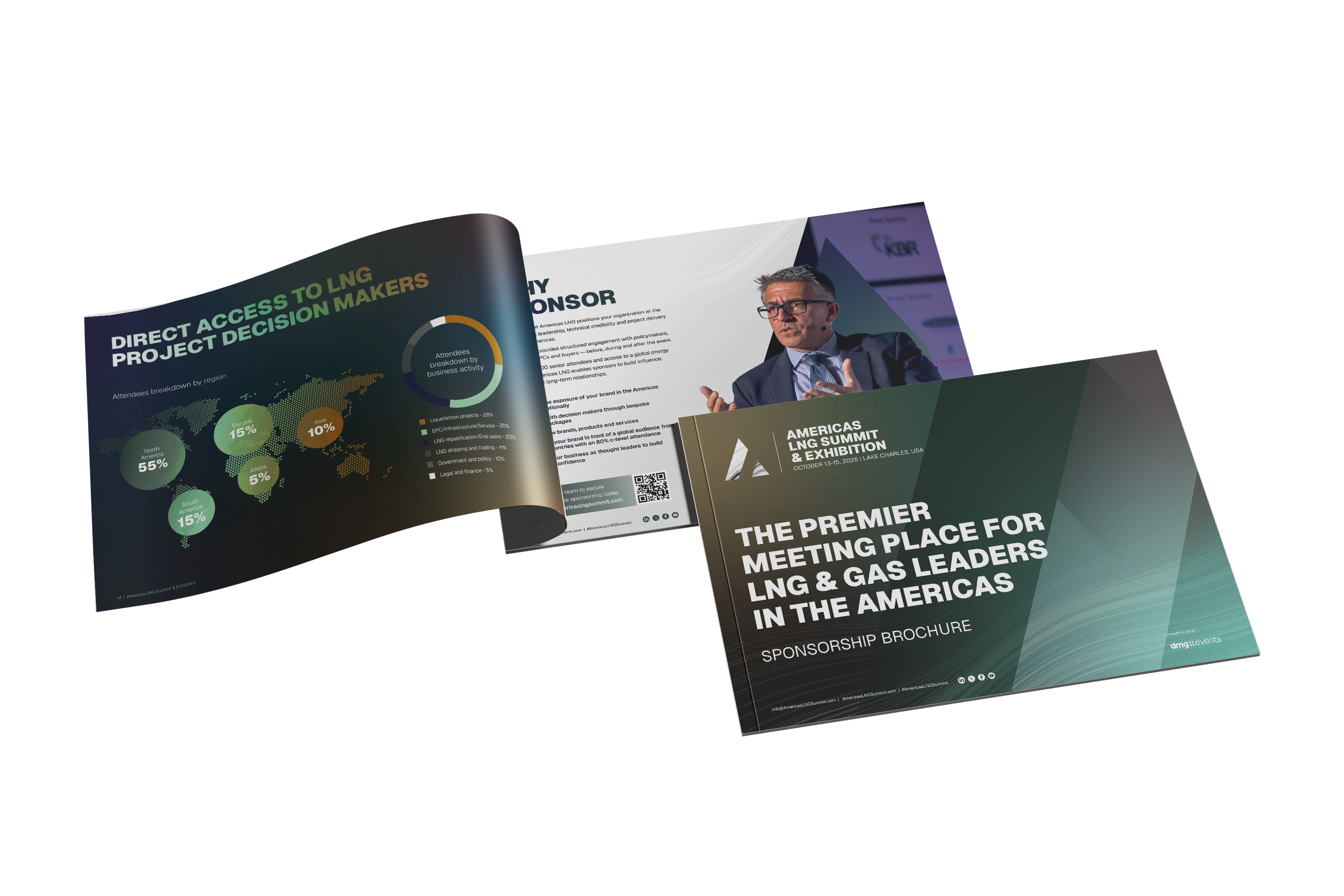
Americas LNG Sponsorship Brochure Mockup

GET INVOLVED

Click the links below to learn how to submit your nominations or sponsor the Awards evening.


Member of